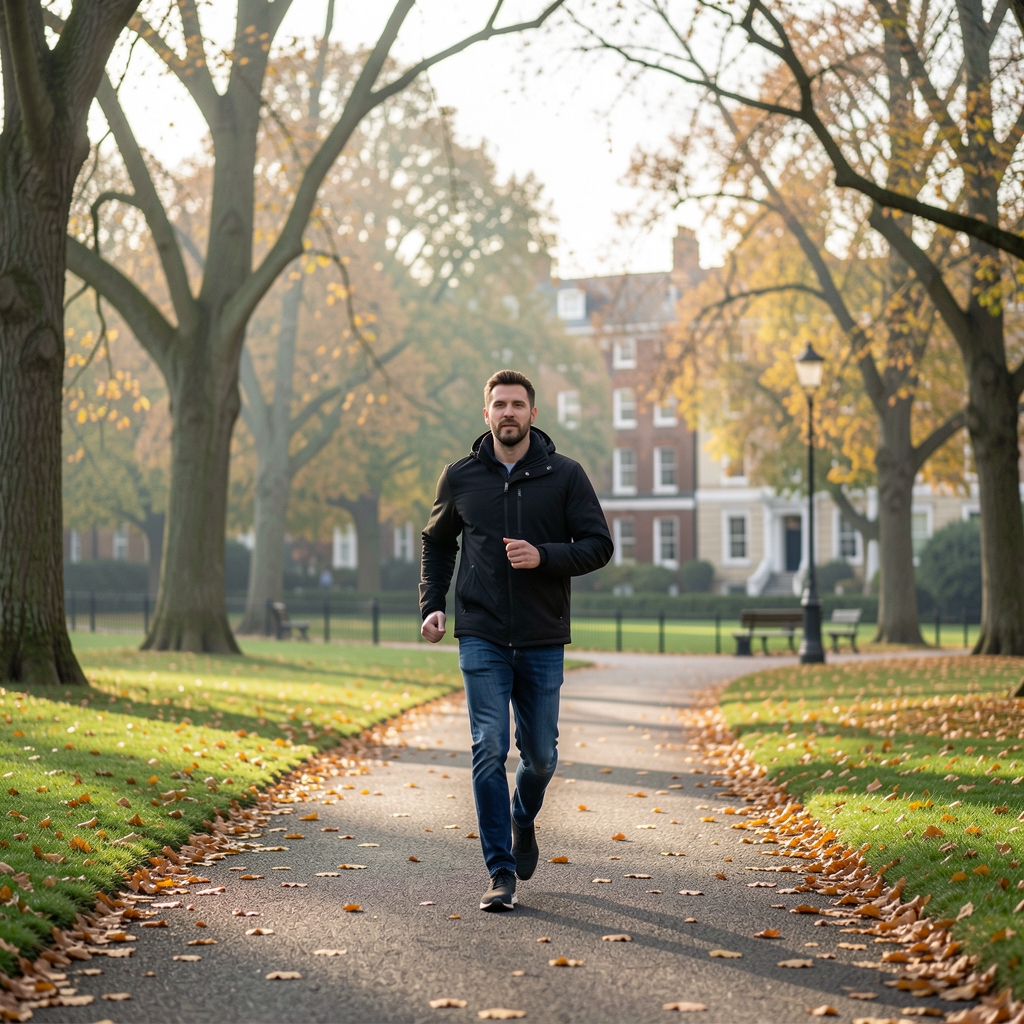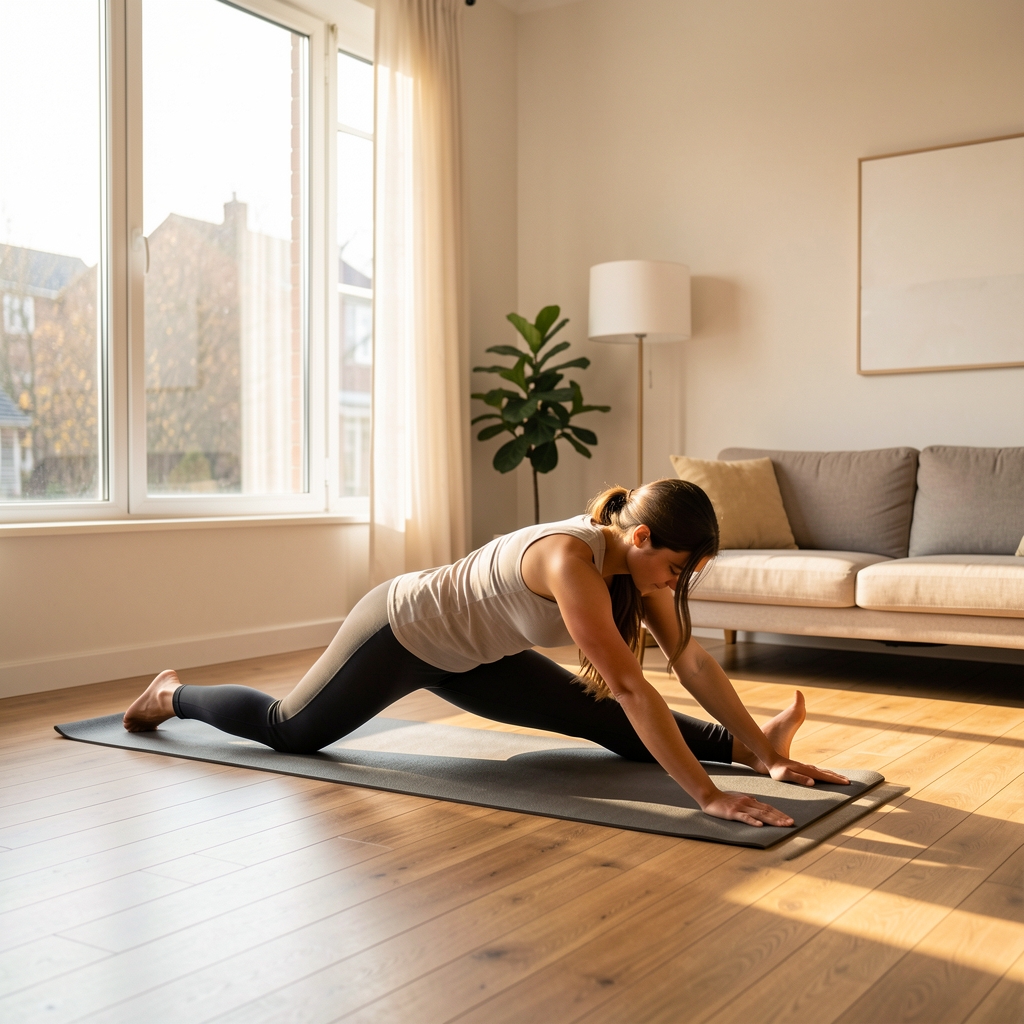
The public park as an exercise environment occupies a particular position in UK movement culture: widely accessible, costless, unstructured, and available across the full range of fitness levels. London alone maintains over 3,000 parks and open spaces. Yet despite this infrastructure, the research literature on how park environments specifically support sustainable movement habits — as distinct from simply providing a surface for activity — remains less developed than evidence on gym-based or structured programme adherence. This article draws on available evidence to examine what park-based bodyweight movement offers to those seeking consistent non-gym activity rhythms for weight management.
The Accessibility Argument and Its Limits
The primary argument for park-based activity is accessibility. A municipal park requires no membership, no equipment purchase, no scheduled class, and no commute to a specialist facility. For those deterred by gym environments — whether due to cost, unfamiliarity with equipment, social anxiety, or scheduling inflexibility — the park represents a lower barrier to initiation and re-entry after periods of inactivity.
The accessibility argument is supported by adherence data. Longitudinal movement studies consistently find that individuals who exercise in environments requiring no financial commitment and minimal advance scheduling sustain their activity habits across longer periods than those dependent on paid memberships or fixed class times. The mechanism is partly economic — a free resource removed significant cost-related barriers to continued participation — and partly behavioural: the absence of a fixed schedule allows activity to adapt to daily variation rather than requiring exact time allocation.
The limit of the accessibility argument is that access without structure does not automatically translate into consistent, progressive activity. Research on unsupported outdoor exercise initiation indicates that approximately 40% of individuals who begin an informal outdoor movement practice discontinue it within eight weeks, citing lack of structure, uncertainty about appropriate progression, and difficulty maintaining motivation without social reinforcement. Park access is therefore necessary but not sufficient for sustained activity; it requires complementary habit structure to translate into consistent movement.
Bodyweight Movement in the Park Context
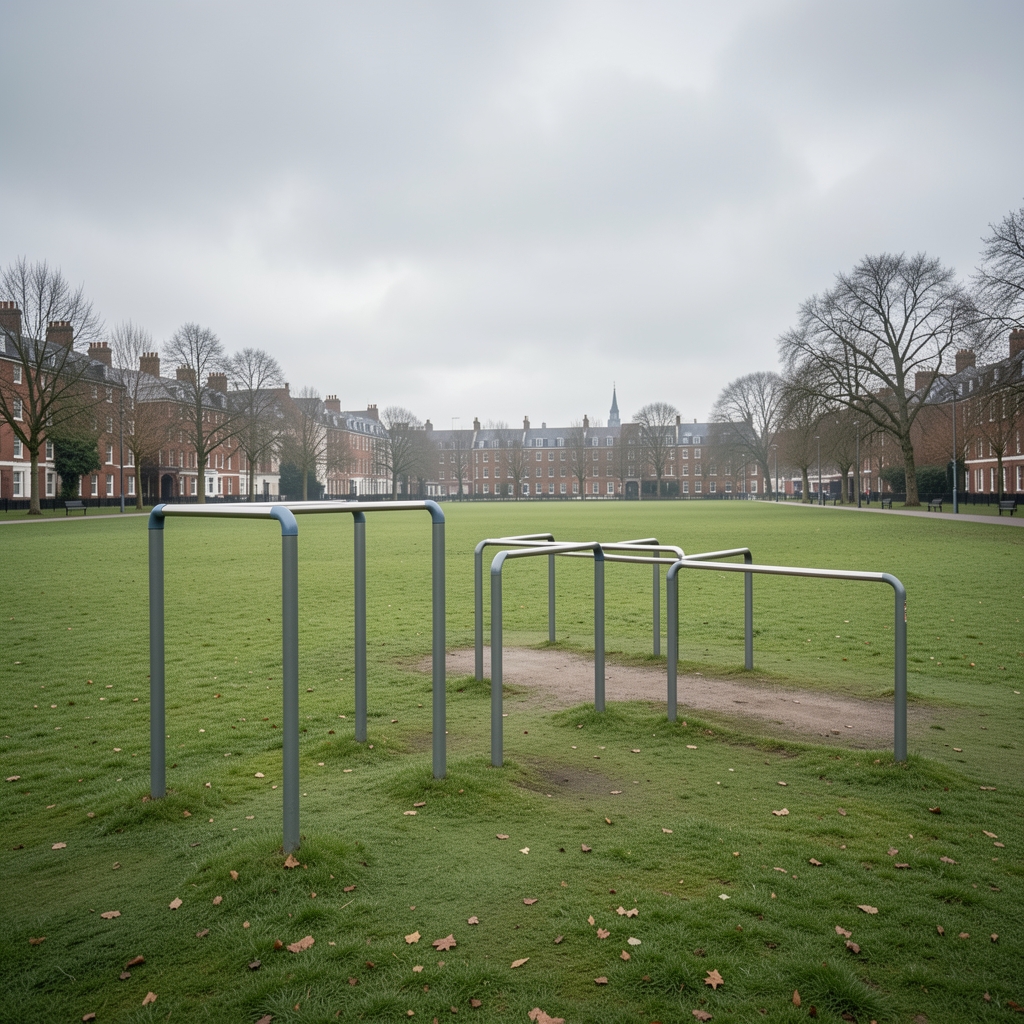
Bodyweight movement — exercise performed using the body's own mass as resistance, without added load — is particularly well-suited to outdoor environments. The category includes push variations, bodyweight squats, lunges, hip hinges, core holds, and dynamic movement patterns that can be performed on grass, paved surfaces, or using fixed outdoor equipment such as parallel bars, pull-up frames, and horizontal bars found in outdoor gym installations.
London's network of outdoor gym installations has expanded significantly since 2010, with the majority of managed parks in inner London boroughs now containing at least one outdoor exercise station. These installations typically include a combination of upper-body pulling and pressing structures, lower-body resistance equipment, and balance or mobility apparatus. Their presence transforms the park from a pure walking and running environment into a space capable of supporting a complete low-to-moderate intensity movement session requiring no personal equipment.
The energy expenditure profile of a park-based bodyweight session at moderate effort — 30 minutes including a combination of walking, dynamic warm-up, bodyweight resistance exercises, and cool-down mobility — sits in the 150–220 kilocalorie range for an average adult, comparable to 30 minutes of moderate-pace cycling on level terrain. For weight management purposes, this level of output, repeated three to four times per week, contributes meaningfully to weekly energy balance without the joint loading associated with higher-impact activities.
"The park is not merely a surface for activity — it is an environmental context that, when appropriately used, supports the psychological conditions for consistent movement: voluntary access, variable intensity, and the absence of performance comparison."
The Consistency Variable: What Outdoor Environments Add
Movement research increasingly attends to the psychological dimensions of activity environments as distinct from their physical affordances. The quality of the immediate environment — visual interest, sensory variety, sense of spaciousness — influences both the perceived exertion during activity and the subjective willingness to return. Studies comparing indoor treadmill walking with outdoor park walking at equivalent pace and duration consistently find lower ratings of perceived exertion and higher ratings of enjoyment for outdoor conditions, a pattern that holds across multiple demographic groups and weather conditions — including overcast and cool conditions typical of London's outdoor exercise climate.
This perceptual advantage translates into documented behaviour differences. Individuals who walk or exercise in outdoor environments report greater likelihood of spontaneously extending session duration, higher rates of next-day return, and lower rates of voluntary session avoidance compared to indoor equivalents. The effect is attributed partly to attentional diversion — the visual complexity of an outdoor environment draws cognitive resources away from awareness of physical fatigue — and partly to what environmental psychologists have termed restorative experiences, a category of perceptual engagement associated with natural environments that reduces perceived effort and improves post-exercise mood.
The consistency premium of outdoor park exercise is particularly relevant for weight management contexts because the primary determinant of long-term weight outcomes is not peak activity intensity but cumulative weekly activity volume over months and years. A moderate-intensity outdoor bodyweight session performed consistently three times per week for six months produces substantially greater cumulative energy expenditure than a higher-intensity indoor programme performed for four weeks before discontinuation.
Constructing a Park-Based Movement Routine
For those seeking to use park-based movement as a primary activity method for weight balance, the research evidence supports a weekly rhythm rather than a daily requirement. Three to four sessions per week of 25–40 minutes each — combining walking, dynamic movement, bodyweight resistance work, and cool-down mobility — generates sufficient weekly energy expenditure to contribute meaningfully to weight management alongside ordinary daily activity.
The structure of individual sessions is less critical than their internal consistency across weeks. A session that reliably begins with a five-minute walk to the exercise area, proceeds through a standing warm-up routine, includes a central block of bodyweight exercises at moderate effort, and closes with light stretching is more valuable — from a habit-formation perspective — than a varied session that produces uncertainty about what to do or how long to continue.
Seasonal adaptation is a practical necessity for year-round outdoor practice in a northern European urban context. London's winter outdoor temperature range of 3–9°C is within the documented comfort zone for moderate-intensity exercise when appropriate layering is worn — heat generated during activity typically produces thermal comfort within the first five minutes of moderate movement. The primary seasonal variable affecting outdoor session completion rates is not temperature but daylight: the reduction in usable outdoor light between November and January restricts viable exercise windows for those dependent on post-work daylight.
Low-Intensity Outdoor Movement and Its Distinct Role
Not all park-based activity is structured around exercise sessions. A distinct category of outdoor movement — unstructured low-intensity activity including slow walking, standing, gentle stretching in a park setting, and informal movement without structured exercise intent — contributes independently to daily energy balance while providing the attentional restoration benefits associated with natural environments.
Research on urban park use patterns finds that the majority of park visits in London are not exercise-oriented: they are leisure visits involving walking at light pace, sitting, social interaction, and child accompaniment. The aggregate movement of these visits — typically 15–40 minutes of light ambulation per visit — nonetheless contributes to daily step counts and NEAT totals in ways that are documentable by wearable accelerometers. For individuals whose work and domestic environments are predominantly sedentary, even these low-intensity park visits represent a meaningful addition to weekly movement volume.
The practical conclusion for those seeking to establish sustainable non-gym activity habits is that park environments support a spectrum of movement engagement — from structured outdoor bodyweight sessions to informal leisure walking — each of which contributes differently but genuinely to the total weekly movement profile relevant to weight balance. The consistent thread across these activity types is the park as an enabling environment: accessible, variable, and associated with the psychological conditions that support voluntary return.